
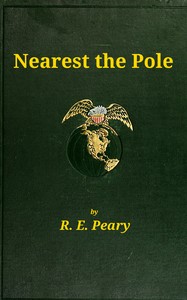
Nearest the Pole by Robert E. Peary
Let's set the scene: it's the early 1900s, and the North Pole is the last great earthly prize. Explorers are obsessed. Robert E. Peary had already failed multiple times, losing toes to frostbite in the process. 'Nearest the Pole' is his firsthand story of the attempt that finally (he claimed) got him there.
The Story
Peary doesn't waste time. He jumps right into the final expedition aboard the ship Roosevelt. The book chronicles the grueling journey north, establishing supply caches, and the crucial partnership with Inuit guides and dog sled teams. The core of the narrative is the brutal 'dash to the pole' itself—a small team fighting against brutal cold, moving over ice that could crack open at any moment. He describes the moment he believed they reached their goal: taking observations, planting flags. But the journey back is just as harrowing, a race against starvation and the breaking ice of spring. The story doesn't end on the ice; it follows him home to a firestorm of controversy, as another explorer, Frederick Cook, claimed to have reached the Pole a year earlier.
Why You Should Read It
You read this for the unfiltered voice of ambition. Peary's writing is direct, stubborn, and utterly convinced of his own rightness. There's no modern reflection here; it's a document of its time. You feel his calculated drive, his reliance on (and sometimes troubling view of) the Inuit people without whom he would have died, and his simmering rage at Cook. It's fascinating as an adventure tale, but even more so as a character study. You're not getting a balanced historical analysis—you're getting inside the head of the man who made the claim. The descriptions of the Arctic landscape are stark and powerful, and the logistical details of early 20th-century polar travel are mind-boggling.
Final Verdict
This book is perfect for anyone who loves real-life adventure stories with a side of historical drama. It's a must-read for armchair explorers and those interested in the Age of Discovery's final chapter. Be warned: you're seeing events through one man's eyes, and the controversies around his claim (and his methods) are part of the package. Don't read it for a neutral history lesson. Read it to experience the sheer audacity of the attempt, to feel the bite of the Arctic wind, and to understand the complicated, flawed, and fiercely determined man who wrote his name into history—right at the top of the map.
This publication is available for unrestricted use. You are welcome to share this with anyone.
Joshua King
4 months agoRead this on my tablet, looks great.







Nancy Torres
1 year agoComprehensive and well-researched.