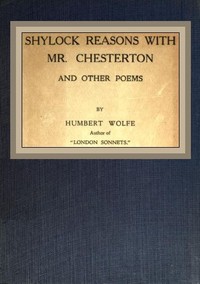
Shylock reasons with Mr. Chesterton, and other poems by Humbert Wolfe
Let's get one thing straight: this isn't your typical poetry collection. Humbert Wolfe, a civil servant and poet writing in the early 20th century, uses verse like a scalpel. The star of the show is the title poem, "Shylock Reasons with Mr. Chesterton." Wolfe imagines a fictional meeting where Shylock confronts the real-life critic and author G.K. Chesterton, who had written some pretty harsh things about Jewish characters in literature.
The Story
There isn't a plot in the traditional sense. Instead, think of it as a courtroom drama in poem form. Shylock takes the stand. He doesn't beg for sympathy; he demands an explanation. He questions Chesterton (and by extension, the reader) about the hypocrisy of the Christian characters who preached mercy but showed him none. He points out the legal contract he held was valid in Venice, and asks why his demand for justice is seen as monstrous when others' are not. The poem is his closing argument, a powerful rebuttal to centuries of being painted as a one-dimensional villain. The other poems in the book tackle everything from the absurdities of office life to social commentary, all with Wolfe's signature cleverness and bite.
Why You Should Read It
This book surprised me. I went in expecting formal, old-fashioned poetry, but found a voice that felt incredibly modern. Wolfe gives Shylock a dignity and intelligence that Shakespeare's play often lets audiences overlook. Reading it, you're forced to sit with uncomfortable questions about prejudice, the law, and who gets to be the hero of a story. It’s less about "Was Shylock right?" and more about "Why have we only ever heard one side of this?" The language is crisp and direct—no flowery nonsense here. It’s argumentative, passionate, and makes you rethink a character you thought you knew.
Final Verdict
This is a perfect pick for anyone who loves a good debate, enjoys classic literature but wants to see it challenged, or is simply tired of poetry that only talks about flowers. If you've ever read *The Merchant of Venice* and felt uneasy about how it all went down, Wolfe's Shylock is speaking directly to you. It's also a great, accessible entry point into early 20th-century poetry because it tackles big ideas without getting lost in abstraction. Give it a read—you might just find yourself on Shylock's side.
You are viewing a work that belongs to the global public domain. Preserving history for future generations.