
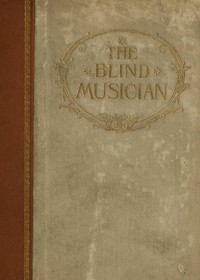
The Blind Musician by Vladimir Galaktionovich Korolenko
First published in 1886, Vladimir Korolenko's The Blind Musician is a quiet classic that deserves a much wider audience. It’s a deeply psychological portrait that feels remarkably modern in its exploration of inner life.
The Story
We follow Pyotr Popelsky from birth. Born blind to a loving family on a Ukrainian estate, his world is defined by sound, touch, and smell. His mother and uncle pour their love into him, but a profound loneliness takes root. He becomes fascinated by music, finding in the piano a language for emotions he can't otherwise share. As he grows, his talent flourishes, but so does his anguish. He grapples with resentment, feeling like a spectator in life, separate from his sighted cousin and the girl he loves. A pivotal encounter with a group of blind beggars forces him to confront a possible future of pure despair, setting him on a path to find not just technical mastery in music, but a way to translate the human experience—both its darkness and its light—into his art.
Why You Should Read It
What hooked me wasn't a twisty plot, but Korolenko's incredible empathy. He doesn't treat Pyotr's blindness as a puzzle to be solved. Instead, he builds Pyotr's reality from the ground up. You feel the world through the hum of the estate, the texture of a hand, the distance in a voice. The central question isn't 'Will he succeed?' but 'How will he find his place?' The book argues that true art, and a full life, comes from engaging with the world's pain as much as its beauty. Pyotr’s journey from self-pity to a deeper understanding is moving without being sentimental. It’s a story about finding your voice, literally and figuratively.
Final Verdict
This is a book for thoughtful readers. If you love character-driven stories that explore the human psyche, like Dostoevsky but a bit more accessible, you'll find a gem here. It's perfect for anyone interested in music, psychology, or classic literature that focuses on internal struggle over external drama. Fair warning: it's a slow, reflective read, not a page-turner. But if you let yourself sink into Pyotr's world, you'll come away with a richer appreciation for your own senses and a powerful little story about the universal search for connection and meaning.
This publication is available for unrestricted use. You do not need permission to reproduce this work.
Mark Jackson
1 year agoNot bad at all.
Donna Johnson
1 year agoGood quality content.
Paul Miller
6 months agoI have to admit, the pacing is just right, keeping you engaged. Thanks for sharing this review.
Ashley Johnson
10 months agoJust what I was looking for.
Brian Moore
1 year agoLoved it.