
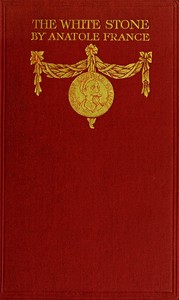
The White Stone by Anatole France
Have you ever wished you could just take a break from your own century? That's exactly what happens to our unnamed narrator in The White Stone. He's a modern man (for the 1890s) who feels completely out of step with his era. During a trip to Rome, he finds a peculiar white stone among ancient ruins. Touching it doesn't whisk him away in a flash of light. Instead, it triggers a deep, visionary sleep where he dreams himself into the year 2270.
The Story
In this future, humanity has weathered a great collapse and rebuilt a peaceful, socialist utopia on a global scale. War, poverty, and most religions are distant memories. The narrator, still thinking with his 19th-century mind, is guided by a friendly future historian named Hippolyte Dufresne. Together, they explore this new world. The narrator is constantly shocked. He sees art that has no interest in glorifying individuals, science that serves pure knowledge, and a society that finds his old-world concerns with nationalism and class utterly baffling. The heart of the story isn't an action plot—it's a series of conversations. The narrator argues, questions, and slowly has his entire worldview dismantled by people who see his time as a strange and brutal prelude to their own calm existence.
Why You Should Read It
This book is a quiet punch to the gut. France isn't trying to predict the future accurately; he's holding up a mirror to his own society's anxieties. Reading it today is a double experience. You see a 19th-century man criticizing the 19th century, but you also get to see how our own 21st-century worries might look to someone 200 years from now. It’s incredibly humbling. The characters are really just voices for ideas, but that's the point. It feels like listening in on the most fascinating, patient debate you've ever heard. The future citizens aren't smug; they're just genuinely confused by why we lived the way we did. That perspective alone is worth the price of admission.
Final Verdict
This is not a book for someone craving a fast-paced plot. It's for the thoughtful reader, the person who loves history and big ideas. It's perfect for anyone who enjoys classic writers like H.G. Wells or Jules Verne, but prefers philosophical questions over gadgets and aliens. If you've ever read a news headline and thought, 'Surely we can do better than this,' then Anatole France's strange little dream of a future will feel like a refreshing, challenging, and oddly hopeful conversation. It's a short, dense read that you'll likely want to sip slowly, maybe more than once.
This digital edition is based on a public domain text. Access is open to everyone around the world.
Daniel Clark
5 months agoI stumbled upon this title and the arguments are well-supported by credible references. I couldn't put it down.

Charles Gonzalez
7 months agoHelped me clear up some confusion on the topic.