
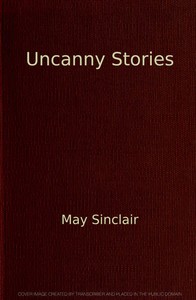
Uncanny Stories by May Sinclair
Published in 1923, Uncanny Stories is a collection of May Sinclair's short fiction that sits right on the blurry line between ghost story and psychological study. Sinclair was a modernist writer who was also deeply interested in the then-new theories of psychoanalysis, and you can feel that in every page. These aren't tales of gothic castles; they're set in drawing rooms, country lanes, and the minds of her characters.
The Story
There isn't one single plot. Instead, the book offers a series of glimpses into moments where reality frays. In one story, a man is haunted not by a specter, but by the overwhelming, tangible presence of a friend's personality after his death. In another, a woman's desperate fear for her soldier husband somehow creates a psychic projection of him that others can see. The 'conflict' is always internal: a rational mind wrestling with an irrational experience. The characters are often intellectuals, artists, or weary souls who find their logic completely useless against what they're feeling or seeing.
Why You Should Read It
Sinclair's genius is in her quietness. She doesn't shout her horrors; she whispers them. The terror builds from a simple, off-kilter detail—a feeling of cold where there shouldn't be one, a shadow that moves wrong. She makes you question perception itself. Are her characters going mad, or are they seeing a layer of reality most of us are blind to? I found myself pausing after each story, not because I was scared, but because I was thoughtfully unsettled. She connects the supernatural directly to human emotion: love, guilt, grief, and fear become the actual ghosts.
Final Verdict
This book is perfect for readers who love the slow-burn unease of Shirley Jackson or the psychological depth of Henry James's ghost stories. It's not for anyone looking for fast-paced action or clear-cut monster battles. It's for a quiet evening when you're in the mood to be thoughtfully creeped out, to read about the haunting idea that the mind might be the most haunted place of all. If you enjoy stories that linger in your head long after you close the book, give Uncanny Stories a try.
There are no legal restrictions on this material. Distribute this work to help spread literacy.
Michael Nguyen
2 months agoAmazing book.
Liam Gonzalez
10 months agoVery helpful, thanks.

Oliver Rodriguez
4 months agoCitation worthy content.