
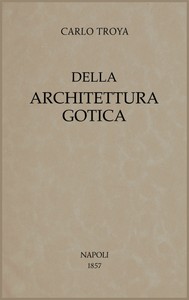
Della architettura gotica by Carlo Troya
Most history books about Gothic cathedrals tell you about the wealthy patrons and the grand archbishops. Carlo Troya's Della architettura gotica flips that script. Written in the first half of the 19th century, it asks a radical question for its time: what about the workers?
The Story
The book isn't a novel with a plot, but it has a clear mission. Troya digs through old ledgers, guild records, and even the buildings themselves to piece together a social history of Gothic construction. He follows the money trail from the patron's purse to the mason's wage. He analyzes structural innovations not as abstract ideas, but as solutions devised by practical builders facing real problems. The 'story' is his journey to pull these anonymous figures—the master masons, the itinerant carvers, the glass artisans—out of the shadows and give them credit. It's about connecting the breathtaking beauty of a flying buttress to the skilled hand that planned and set it.
Why You Should Read It
This book makes you look at architecture with new eyes. Before reading Troya, I saw cathedrals as monolithic achievements of an era. Now, I see them as collective projects, filled with thousands of individual decisions. Troya's passion is contagious. He gets genuinely excited about a payroll document that lists a 'Johannes the Stonecutter,' because it's a rare piece of evidence of a real person. His writing argues that the Gothic style wasn't a sudden miracle; it was evolved by these craftsmen solving problems of light, space, and weight, one project at a time. It's a deeply humanist take on art history.
Final Verdict
This is a niche but brilliant read for a specific kind of person. It's perfect for history buffs, art lovers, or travelers who want to go deeper than the guidebook when they visit a Gothic site. It's also great for anyone who enjoys stories about unsung experts and master craftspeople. Be warned: it's an older academic text, so the prose can be dense in places. But if you're patient, the perspective it offers is utterly rewarding. You'll never walk through a medieval cathedral the same way again.
This masterpiece is free from copyright limitations. Use this text in your own projects freely.
Steven Anderson
3 months agoGood quality content.
Ethan Thompson
1 year agoI have to admit, the character development leaves a lasting impact. Absolutely essential reading.
Liam Thomas
9 months agoEnjoyed every page.
Sandra Nguyen
1 year agoAfter hearing about this author multiple times, the clarity of the writing makes this accessible. This story will stay with me.






Susan Thomas
1 year agoHelped me clear up some confusion on the topic.