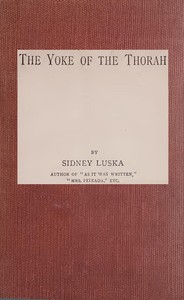
The Yoke of the Thorah by Henry Harland
Let's set the scene. It's New York City, but not the one we know. It's the Gilded Age, a time of old-world manners colliding with new-world dreams. We meet Leonard, a talented Jewish painter who has made a good life for himself. He’s in love with Rosalind, a beautiful and kind Christian woman from a prominent family. They want to get married and build a life together, free from the old divisions.
The Story
Just as Leonard and Rosalind are planning their future, his grandmother steps in. She’s not just being difficult. She reveals a solemn family vow, a promise made to honor their faith and ancestors, that forbids such a marriage. To her, this isn't about prejudice; it's about a sacred duty and the fear of a spiritual consequence—a 'yoke' that Leonard must bear. Suddenly, Leonard’s world splits in two. On one side is the woman he loves and the modern life he’s built. On the other is the weight of generations, a tradition that feels both foreign and deeply personal. The story follows his agonizing struggle as he tries to find a path forward without breaking his own heart or his grandmother's.
Why You Should Read It
What grabbed me wasn't just the romance, but the brutal honesty of Leonard’s conflict. This isn't a simple tale of good versus evil. Harland makes you feel the genuine pull from both sides. The grandmother isn't a villain; she’s a woman shaped by hardship and faith, which makes her stance heartbreakingly real. The book quietly explores what it means to belong, to carry a history you didn't choose, and whether love can ever truly be free. It’s a deep, character-driven look at identity that still feels incredibly relevant today. You’ll find yourself asking what you would do in his shoes.
Final Verdict
This is a perfect pick for readers who love historical fiction that focuses on internal drama over sweeping battles. If you enjoyed the emotional dilemmas in books like The Age of Innocence or are fascinated by stories of cultural assimilation and personal faith, you’ll find a lot to love here. It’s a thoughtful, sometimes aching, portrait of a man caught between two worlds, and it proves that some struggles are timeless.
You are viewing a work that belongs to the global public domain. You can copy, modify, and distribute it freely.