
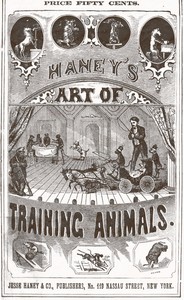
Haney's Art of Training Animals by W. H. Burroughs
Let's be clear from the start: this is not a novel. Published in 1859, 'Haney's Art of Training Animals' is exactly what it sounds like—a practical guide. It compiles the methods of the famous 19th-century animal trainer, Frank C. Haney, as written by W.H. Burroughs. The book walks you through Haney's techniques for managing and training a huge variety of creatures: horses, dogs, elephants, and even more exotic animals like lions.
The Story
There's no traditional plot. Instead, the 'story' is the unfolding of Haney's philosophy and step-by-step instructions. He lays out his system, which he often calls 'gentling.' He argues against sheer force, emphasizing the need to study an animal's nature, to be patient, and to use reward. He details how to break a horse to harness, teach a dog tricks, or manage a big cat in a traveling show. The narrative is the logic of his process, from first approach to finished performance.
Why You Should Read It
I picked this up expecting a quaint historical curiosity, but it hit me much harder. Reading it is a deeply strange experience. One moment, Haney's advice feels almost progressive—he stresses calmness and warns that fear makes animals dangerous. You think, 'Hey, this guy gets it!' Then, in the next breath, he describes standard practices that are undeniably cruel by today's standards. The contradiction is jarring. It doesn't present a villain; it presents a man of his time, who believed he was being kind while using tools we now see as abusive. That's what makes it so compelling and uncomfortable. It's a direct line into a mindset that's foreign to us now. It made me reflect on our own relationship with animals—what practices do we accept today that future generations might look back on with the same horror?
Final Verdict
This is a niche read, but a powerful one. It's perfect for anyone interested in the history of human-animal relationships, 19th-century social history, or the roots of modern animal training. If you enjoy primary sources that don't sugarcoat the past, this short book is a goldmine. It's not a fun escape; it's a thought-provoking, sometimes difficult, piece of the past that holds up a mirror to our own assumptions. Just be prepared for some rough passages.
This book is widely considered to be in the public domain. Preserving history for future generations.
Amanda Nguyen
1 year agoSolid story.