
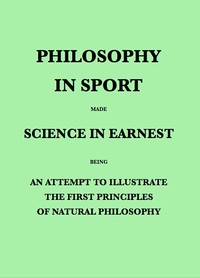
Philosophy in Sport Made Science in Earnest by John Ayrton Paris
Picture a long, lazy summer in the English countryside. A father, Mr. Seymour, arrives to spend the holidays with his three curious children. Instead of packing their days with formal lessons from a dusty textbook, he has a different plan. He decides to use their games and playthings as the ultimate classroom.
The Story
The book is a series of conversations and demonstrations. When the children play with a spinning top, Mr. Seymour explains the physics of rotational motion and stability. Flying a kite leads to a talk about wind, pressure, and the shape of wings. A simple game of marbles becomes a lesson in collision and momentum. Even a walk in the garden or watching soap bubbles can spark a deep discussion about botany or the properties of light. The 'plot' is simply the unfolding of their holiday, with each new day and each new toy offering a fresh opportunity to explore the science hidden in plain sight. The children's natural questions drive the discoveries, and their father gently guides them to find the answers through observation and reason.
Why You Should Read It
What charmed me most wasn't just the clever science experiments—it was the warmth of the family dynamic. Mr. Seymour isn't a lecturing professor; he's a patient and playful guide. You can feel his delight in his children's 'Aha!' moments. The book makes a powerful argument that we learn best when we're engaged and having fun, a idea that feels incredibly modern. It strips away the intimidating jargon and shows that the principles governing a bouncing ball are the same ones that govern planets. It turns the whole world into a fascinating, interactive exhibit.
Final Verdict
This is a gem for curious minds of all ages. It's perfect for parents or teachers looking for inspiration to make science tangible and joyful. History lovers will enjoy this snapshot of early 19th-century thought and domestic life. And for any general reader, it's a refreshing reminder of the wonder that exists in ordinary things. Don't expect a novel with a twisting plot; instead, come ready for a thoughtful, charming, and surprisingly fun conversation with a very clever family. It’s a book that doesn't just explain science—it reminds you how to be amazed by it.
This title is part of the public domain archive. Share knowledge freely with the world.
Christopher Wilson
1 year agoSimply put, the narrative structure is incredibly compelling. A valuable addition to my collection.
Sarah Moore
2 months agoGreat digital experience compared to other versions.


Matthew Scott
1 year agoFast paced, good book.